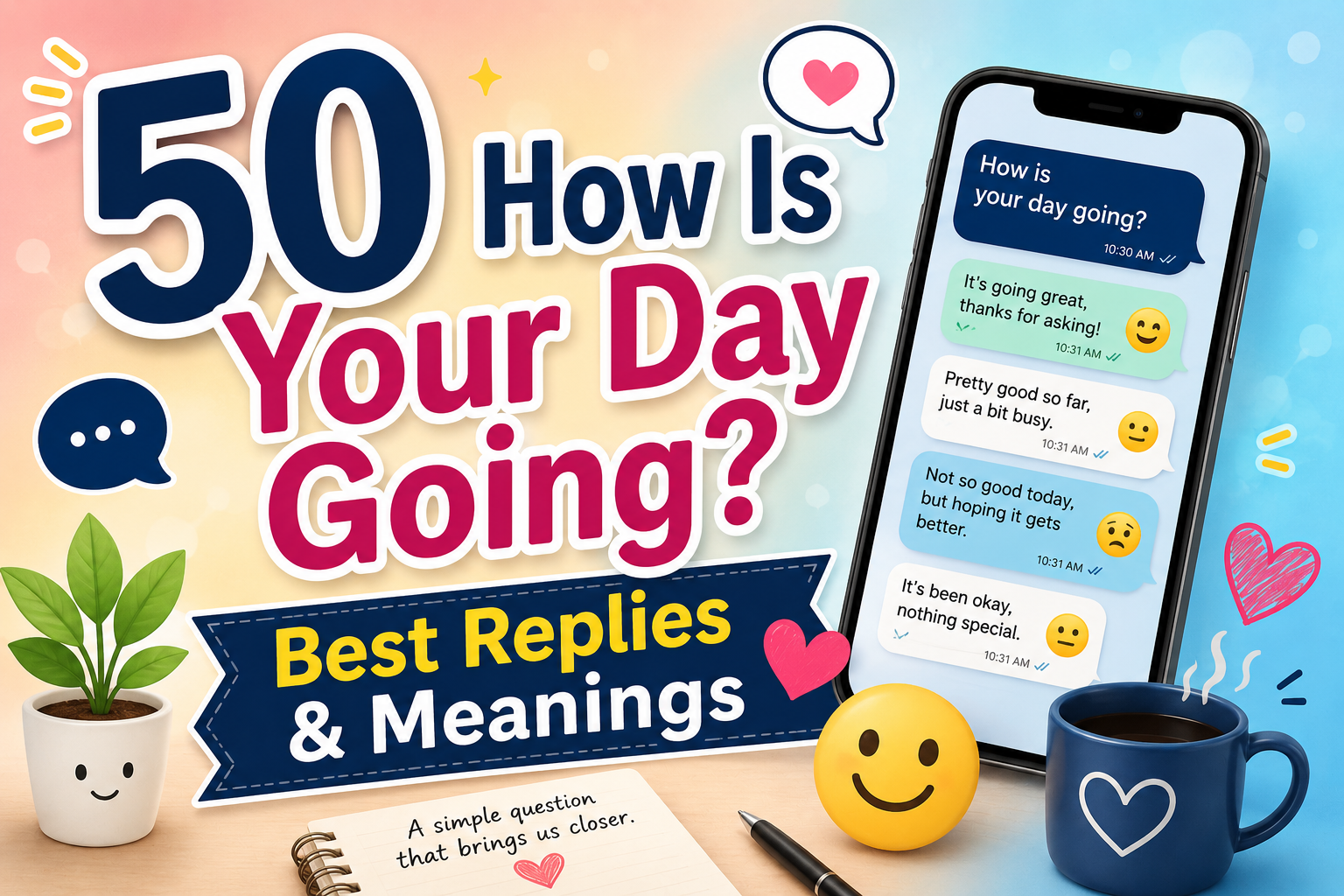
“How is your day going?” is a simple question, yet many people pause before answering it. Understanding the meaning of “how is your day going” helps you respond with confidence, whether you’re replying in a casual chat, a professional setting, or a text message.
From friendly small talk to genuine emotional check-ins, this phrase can shape the direction of any conversation. In this guide, you’ll discover the best replies to “how is your day going,” along with smart, polite, and engaging responses that fit every mood and situation check more here : 250+ Romantic Long Cute Messages for Her
What Does “How Is Your Day Going?” Really Mean?
Literal meaning vs conversational intent
The literal meaning of “how is your day going” is a question about how someone’s day is progressing. However, in most conversations, the intent is conversational rather than investigative. It’s often used as a friendly opener instead of a request for detailed information.
Why it’s more than just a greeting
While it sounds casual, this question often signals interest, politeness, or emotional awareness. Unlike a simple “hello,” it invites a response that can shape the tone of the entire conversation.
How context changes the meaning
Context plays a major role in how the question is understood. In professional settings, it’s usually polite small talk, while in personal conversations, it may reflect genuine curiosity. This is why the meaning of “how is your day going” shifts depending on who asks and when.
Why People Ask “How Is Your Day Going?”
Politeness and social bonding
People ask this question to build rapport and maintain social connection. It helps create a friendly atmosphere and signals respect and attentiveness in everyday interactions.
Showing interest vs making small talk
Sometimes the question shows real interest in your well-being, while other times it’s simply small talk. The difference usually depends on tone, timing, and the relationship between speakers.
Emotional check-in intent
In closer relationships, “how is your day going?” acts as an emotional check-in. It gives the other person space to share how they’re feeling without pressure.
Best Replies to “How Is Your Day Going?” (All Situations)
Simple, universal replies
Simple replies work well in almost any situation. They’re easy to deliver, socially acceptable, and keep the conversation flowing without oversharing.
Honest but neutral answers
Honest yet neutral answers acknowledge your day without sounding too positive or negative. These replies to how is your day going are especially useful in mixed or professional settings.
Conversation-friendly responses
Conversation-friendly responses invite follow-up without forcing it. They help keep dialogue open and make interactions feel natural rather than abrupt.
Casual Replies That Feel Natural
Relaxed everyday responses
Casual replies reflect everyday mood and routine. They feel effortless and are perfect for friends, acquaintances, or informal chats.
Friendly tone examples
A friendly tone makes even simple answers sound engaging. It signals openness and warmth, encouraging comfortable interaction.
Low-effort but engaging answers
Low-effort responses still add value when they sound genuine. These answers avoid sounding rushed while keeping things light and easy.
Funny Replies to “How Is Your Day Going?”
Light humor responses
Light humor keeps things playful without going too far. Funny replies to how is your day going work best when they’re easy to understand and relatable.
Playful exaggeration
Exaggeration adds personality to your reply. Overstating minor events in a playful way can make your answer more memorable and entertaining.
Safe jokes for any setting
Safe jokes avoid sensitive topics and sarcasm. They’re ideal for workplaces, group chats, or conversations where you’re unsure of the other person’s humor style.
When You’re Having a Great Day
Positive and energetic replies
Positive replies reflect enthusiasm without sounding boastful. They communicate good energy and set an upbeat tone for the conversation.
Sharing good vibes
Sharing good vibes spreads positivity. These responses can uplift the other person while keeping the interaction friendly and balanced.
Keeping enthusiasm balanced
While it’s good to sound happy, balanced enthusiasm prevents oversharing. A measured tone keeps the response relatable and socially comfortable.
When You’re Not Having a Good Day
Honest but polite responses
When your day isn’t going well, honesty paired with politeness works best. These replies acknowledge how you feel without sounding negative or inviting unnecessary concern.
Low-energy answers
Low-energy answers keep things simple and calm. They communicate that you’re not at your best while still maintaining a respectful and friendly tone.
When to keep it short
Keeping your response short is helpful when you don’t have the energy to explain. Brief answers prevent the conversation from becoming emotionally draining.
Professional & Polite Responses
Workplace-safe replies
Workplace-safe replies maintain professionalism while still sounding human. These professional replies to how is your day going avoid oversharing and keep interactions appropriate.
Email and chat appropriate answers
In emails and work chats, clarity matters. Short, neutral responses help avoid misinterpretation and keep communication efficient.
Respectful tone for colleagues
A respectful tone shows consideration for colleagues. Even simple answers can sound professional when delivered calmly and thoughtfully.
Flirty Replies (Playful but Safe)
Light teasing responses
Light teasing adds charm without pressure. Flirty replies to how is your day going work best when they’re subtle and friendly rather than bold.
Cute and charming answers
Cute responses create warmth and interest. These answers feel inviting and natural, helping the conversation flow comfortably.
Keeping it natural, not forced
Natural flirting feels effortless. Avoid forcing humor or compliments, as relaxed delivery makes flirty replies more appealing.
Deep or Meaningful Replies
Thoughtful responses
Thoughtful replies show emotional awareness. They’re useful when the question comes from someone genuinely interested in your well-being.
Emotional honesty
Emotional honesty helps build trust. Sharing how your day truly feels can deepen connection when the situation allows.
When deeper answers fit
Deeper answers fit best in close relationships or quiet conversations. In casual settings, they may feel out of place.
Short Replies for Texting & Messaging
One-line responses
One-line replies are perfect for quick chats. They keep the conversation moving without demanding too much attention.
Emoji-friendly replies
Emojis help convey tone in text. Emoji-friendly text replies to how is your day going feel warmer and more expressive.
Fast chat answers
Fast chat answers suit busy moments. They show responsiveness while respecting time and energy limits.
When You Don’t Want to Answer Fully
Polite deflection replies
Polite deflection lets you avoid detail without sounding rude. These responses gently redirect the conversation.
Neutral responses
Neutral replies provide minimal information. They’re useful when you prefer privacy or don’t want to engage deeply.
Keeping boundaries intact
Setting boundaries through wording helps protect emotional space. Clear but kind responses prevent pressure to explain.
Smart Replies That Keep the Conversation Going
Follow-up friendly answers
Follow-up friendly answers naturally invite the other person to respond. They keep the exchange balanced and engaging.
Turning replies into dialogue
A smart reply opens the door to dialogue. Adding a small detail or question helps the conversation flow smoothly.
Avoiding conversation dead-ends
Avoiding short, closed responses prevents awkward stops. Thoughtful phrasing keeps interactions lively and ongoing.
What Your Answer Says About You
Emotional tone signals
Your response to “how is your day going?” signals your emotional state. Positive or calm answers suggest openness and stability, while short or flat replies may indicate stress, fatigue, or a desire for space.
Social impression impact
How you answer shapes the impression others form about you. Thoughtful or friendly replies make you seem approachable, whereas rushed or dismissive responses can unintentionally create distance.
Confidence and openness
Balanced answers reflect confidence and self-awareness. Being open without oversharing shows emotional maturity and comfort in social interactions.
Other Ways to Say “How Is Your Day Going?”
Casual alternatives
Casual alternatives feel relaxed and conversational. These phrases are commonly used among friends or informal chats and sound natural without effort.
Professional alternatives
In professional settings, alternatives should remain polite and neutral. Using different wording can keep communication fresh while maintaining workplace tone.
Friendly variations
Friendly variations add warmth and personality. These other ways to say how is your day going help conversations feel less repetitive and more engaging.
Common Mistakes When Answering “How Is Your Day Going?”
Oversharing
Oversharing can overwhelm the listener, especially in casual or professional settings. Detailed explanations may feel out of place and disrupt the flow of conversation.
Being too vague
Being overly vague can make your response sound disengaged. One-word answers often shut down dialogue rather than encouraging interaction.
Sounding disinterested
A flat or uninterested tone may be misinterpreted as rudeness. Even simple responses benefit from warmth or clarity to avoid awkwardness.
Cultural Differences in This Question
Small-talk cultures vs direct cultures
In small-talk cultures, the question is often a polite ritual. In direct cultures, it may invite a more honest and detailed response.
Why answers vary globally
Cultural norms influence how much emotion or detail is appropriate. This is why replies to the same question can differ widely across regions.
Misinterpretation risks
Without cultural awareness, answers may be misunderstood. What sounds polite in one culture may seem distant or overly personal in another.
Conclusion
“How is your day going?” may seem like a simple question, but the way you answer it can shape the entire conversation. Your response communicates mood, confidence, and social awareness, whether you choose to be casual, funny, professional, or thoughtful. Understanding context and intent helps you reply in a way that feels natural and appropriate. With the right approach, even a small everyday question can become an opportunity to connect, engage, and leave a positive impression.
FAQs
How to answer to “How is your day going?”
You can answer based on the situation and your mood. Simple and honest replies work well in most cases, while funny or thoughtful responses help keep the conversation engaging. In professional settings, a polite and neutral answer is usually best.
Is it correct to say “how’s your day going?”
Yes, “how’s your day going?” is grammatically correct and commonly used in both casual and professional conversations. It’s a friendly way to check in and start a conversation.
How do I ask how his day is going?
You can ask directly or use a softer variation depending on context. Casual phrasing works well in personal conversations, while more polite wording is better for professional or formal situations.
How’s your day going in other words?
There are many alternatives, such as casual, friendly, or professional variations that keep conversations fresh. Using different wording helps avoid repetition while maintaining the same intent.