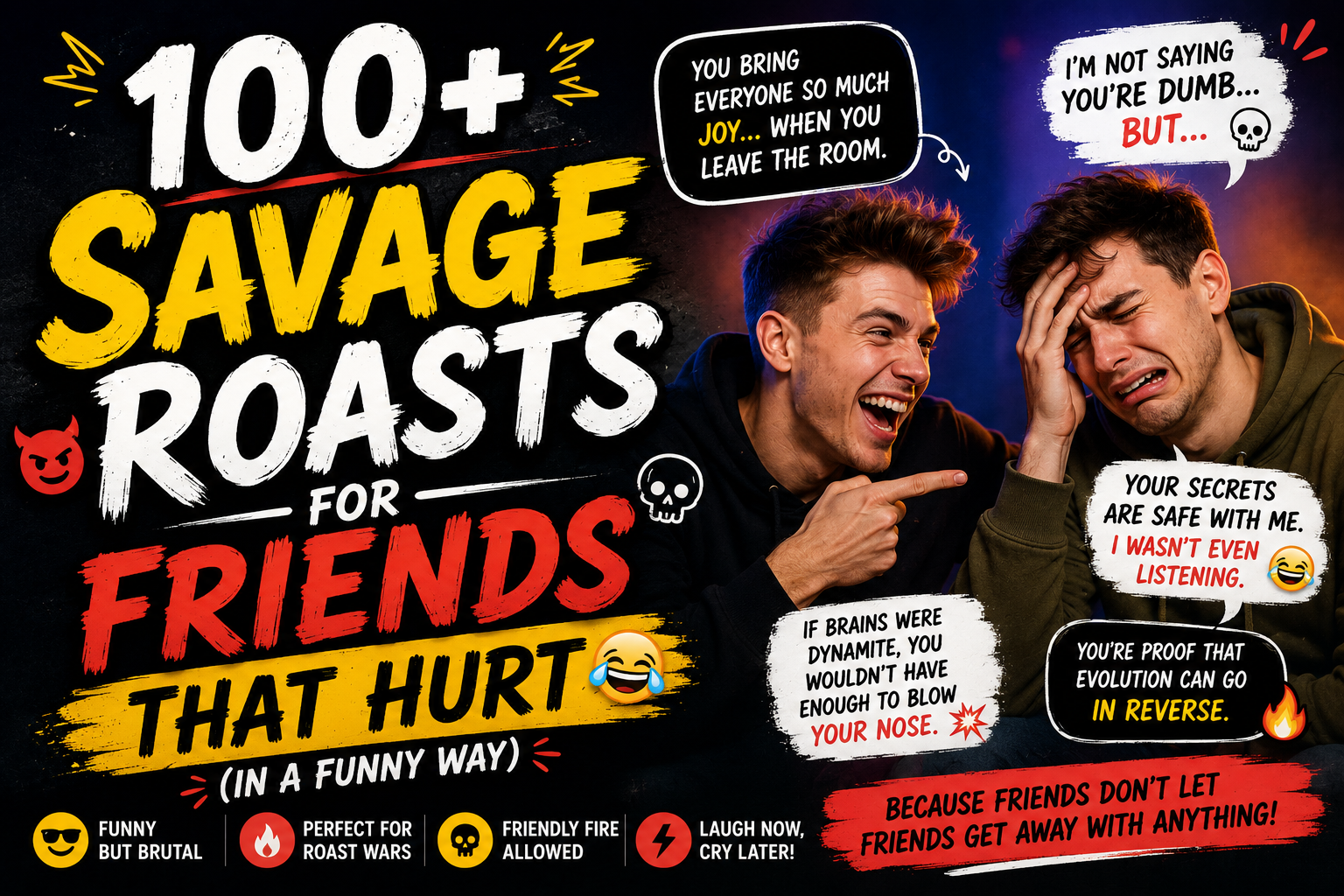
Savage roasts for friends are all about walking the fine line between hilarious and hurtful—in the right way. When done properly, roasting becomes a shared joke that strengthens friendships instead of damaging them.
The goal isn’t cruelty; it’s confidence, timing, and humor that everyone can laugh at afterward check more here : 100+ Best Answers to “How Have You Been?”
What Makes a Roast “Savage” (But Still Friendly)?
Meaning of Savage Roasts in Friendship
In friendships, a savage roast is a bold, witty comment that pokes fun at someone’s habits, personality, or quirks without attacking their insecurities. The savage roast meaning isn’t about being mean—it’s about being sharp, clever, and unapologetically funny in a way your friend understands.
Difference Between Playful Roasting vs Crossing the Line
Playful roasting makes everyone laugh, including the person being roasted. Crossing the line happens when jokes target sensitive topics, personal struggles, or things your friend can’t change. The difference isn’t always the words—it’s how well you know your audience.
Why Intent Matters More Than Words
Intent is everything. The same roast can feel hilarious or hurtful depending on delivery and relationship depth. Savage roasts for friends work best when they come from trust, not ego or resentment.
When It’s Okay to Roast Your Friends (And When It’s Not)
Inside-Joke Friendships vs Sensitive Friends
Some friendships thrive on roasting because of shared history and inside jokes. Others are more sensitive. Knowing which friend can take savage humor—and which can’t—prevents unnecessary tension.
Public Roasting vs Private Roasting
Public roasting hits harder. If you’re unsure how a roast will land, keep it private. Group settings amplify embarrassment, so public roasts should always be lighter and safer.
Reading Comfort Levels
Pay attention to reactions. If your friend laughs genuinely, you’re good. If they go quiet or defensive, you’ve gone too far. Savage roasting should never require damage control.
Knowing When to Stop
The best roasters know when to stop. Repeating the same roast or piling on after it lands ruins the moment and shifts from funny to annoying.
Savage Roasts for Friends (By Style)
Funny Savage Roasts for Friends
Laugh-First Burns
Funny savage roasts focus on humor first. These roasts sting lightly but make everyone laugh before anyone feels attacked.
Humor-Driven Insults
Humor-driven insults exaggerate harmless traits—like bad fashion sense or overconfidence—without turning personal.
Brutal Savage Roasts (Use With Caution)
Sharp, Confident Burns
Brutal savage roasts are bold and direct. These are best used with close friends who roast back just as hard.
Roasts That Hit Instantly
Instant-hit roasts land quickly and leave no room for confusion. Delivery matters more than volume—confidence sells the burn.
Clever Savage Roasts
Smart Wordplay
Clever savage roasts rely on intelligence, not aggression. Wordplay and sarcasm elevate a roast from basic to memorable.
Intelligence-Based Burns
These roasts target logic, habits, or patterns—never intelligence itself—making them witty instead of cruel.
Short Savage Roasts (One-Liners)
Fast Shutdowns
One-liner savage roasts end the moment instantly. They’re perfect for quick clapbacks without dragging the joke out.
Minimal-Word Burns
Less is more. Minimal-word burns feel effortless and confident, which makes them hit harder.
Savage Roasts for Friends (By Situation)
Savage Roasts for Best Friends
Deep-Cut Inside Jokes
Best friends can handle deeper roasts because of shared history. These roasts rely on inside jokes no one else would understand.
Long-Term Friendship Energy
Years of friendship create permission. The longer the bond, the sharper the roast—without crossing into disrespect.
Savage Roasts for Group Chats
Shareable One-Liners
Group chats thrive on short, punchy roasts. Shareable one-liners keep things funny without derailing the conversation.
Roast-Friendly Humor
Group roasts should stay light and inclusive. The goal is laughs from everyone, not awkward silence.
Savage Roasts for Friends Who Roast You First
Clapbacks
If they roast you first, all bets are off—within reason. A confident clapback restores balance and keeps the exchange playful.
Turning the Roast Back
Turning their roast back on them shows wit and timing. The best clapbacks don’t escalate—they flip the joke.
Savage Roasts for Lazy Friends
Productivity Jokes
Lazy friend roasts work best when they exaggerate effort—or lack of it—in a humorous way rather than shaming.
Sleep and Effort Roasts
Sleep jokes and effort roasts are classics because they’re relatable. Everyone’s been lazy at some point, which keeps it funny.
Savage Roasts for Friends (By Personality)
Roasts for the Overconfident Friend
Ego-Checking Humor
Every friend group has that one person who thinks they’re always right, always winning, and always impressive. Ego-checking roasts work best when they gently poke holes in that confidence without turning hostile. The humor comes from exaggerating their self-belief just enough to make it funny instead of offensive.
Reality-Check Burns
Reality-check burns bring exaggerated confidence back down to earth. These roasts remind your overconfident friend—playfully—that confidence is great, but self-awareness is even better.
Roasts for the Always-Late Friend
Time-Management Jokes
Late friends are roast gold. Time-management jokes work because they’re relatable and harmless. Everyone knows the friend who’s “five minutes away” but hasn’t even left yet.
Chronic Lateness Burns
Chronic lateness roasts exaggerate patterns without shaming. These burns land best when delivered casually, turning frustration into laughter rather than annoyance.
Roasts for the Tech-Obsessed Friend
Phone Addiction Jokes
Tech-obsessed friends are easy targets because their habits are obvious. Phone addiction jokes roast screen time, notifications, and scrolling habits without attacking the person themselves.
Social-Media Burns
Social-media burns focus on posting habits, selfies, or obsession with likes. When done right, they feel funny—not judgmental—and usually get laughs from everyone in the group.
Roasts for the Dramatic Friend
Overreaction Humor
Dramatic friends react to small problems like they’re world-ending events. Overreaction humor works by exaggerating their emotional responses until the absurdity becomes funny.
Extra-Energy Burns
Extra-energy burns poke fun at how everything feels like a performance. These roasts should always sound amused, not annoyed, to keep the vibe playful.
Clean Savage Roasts (No Lines Crossed)
PG-13 Roasts
Clean savage roasts rely on wit instead of shock value. They sting just enough to be funny while staying respectful and inclusive.
School- and Work-Safe Burns
These roasts avoid personal attacks and sensitive topics. Perfect for classrooms, offices, or mixed groups where humor needs boundaries.
Humor Without Cruelty
The best clean roasts prove that you don’t need insults to be savage. Timing, tone, and clever phrasing do all the work.
How to Deliver a Savage Roast Without Ruining the Friendship
Tone and Timing
Tone matters more than the roast itself. A smile, relaxed voice, and good timing turn sharp words into shared laughter.
Facial Expression & Delivery
Body language sells the joke. Neutral or playful expressions prevent roasts from sounding aggressive or bitter.
Saying It Once, Not Repeating
A roast lands best once. Repeating it makes it feel targeted instead of funny and shifts the energy from playful to uncomfortable.
Reading Reactions
If your friend laughs genuinely, you’re good. If they hesitate or go quiet, adjust immediately. Good roasters read the room.
Common Mistakes to Avoid When Roasting Friends
Taking It Too Far
Targeting insecurities, trauma, or personal struggles turns roasts into insults. Savage humor should never hurt deeply.
Repeating the Same Roast
Reusing the same joke makes it stale and annoying. Variety keeps roasting fun and creative.
Roasting Insecurities
Insecurities are off-limits. Even joking about them can damage trust.
Public Embarrassment
Public roasting amplifies impact. If you’re unsure how it’ll land, keep it private or lighten the tone.
Savage Roasts vs Mean Insults
Intent vs Impact
Roasts come from playfulness; insults come from ego. Even funny words feel wrong if the intent isn’t right.
Why Real Roasts Still Feel Funny
Good roasts make the target laugh too. If only the roaster is laughing, it’s not a roast—it’s an insult.
Keeping Respect Intact
Respect is what separates savage humor from cruelty. True roasting strengthens bonds instead of weakening them.
Why Roasting Strengthens Friendships (When Done Right)
Humor as Bonding
Shared laughter creates closeness. Roasting builds a sense of “we’re comfortable enough to joke like this.”
Trust and Comfort Levels
Roasting signals trust. It shows friends feel safe enough to joke without fear of offense.
Shared Laughter Dynamics
The strongest friendships often laugh the hardest—especially at each other.
Conclusion – Roast Hard, Laugh Harder
Savage roasts for friends are best when they’re clever, confident, and kind underneath the humor. When done right, roasting becomes a shared language of trust, laughter, and connection. Roast hard—but always leave room for laughter.
FAQs
What are some abusive words for my friend?
Avoid abusive words. Savage roasts should be humorous, not harmful or degrading.
What are good savage quotes?
Good savage quotes rely on wit, timing, and exaggeration rather than insults.
How to roast in a nice way?
Focus on habits or quirks, keep the tone playful, and stop if it doesn’t land.
What are rare insult words?
Creative roasts are better than rare insult words—clever humor always hits harder.