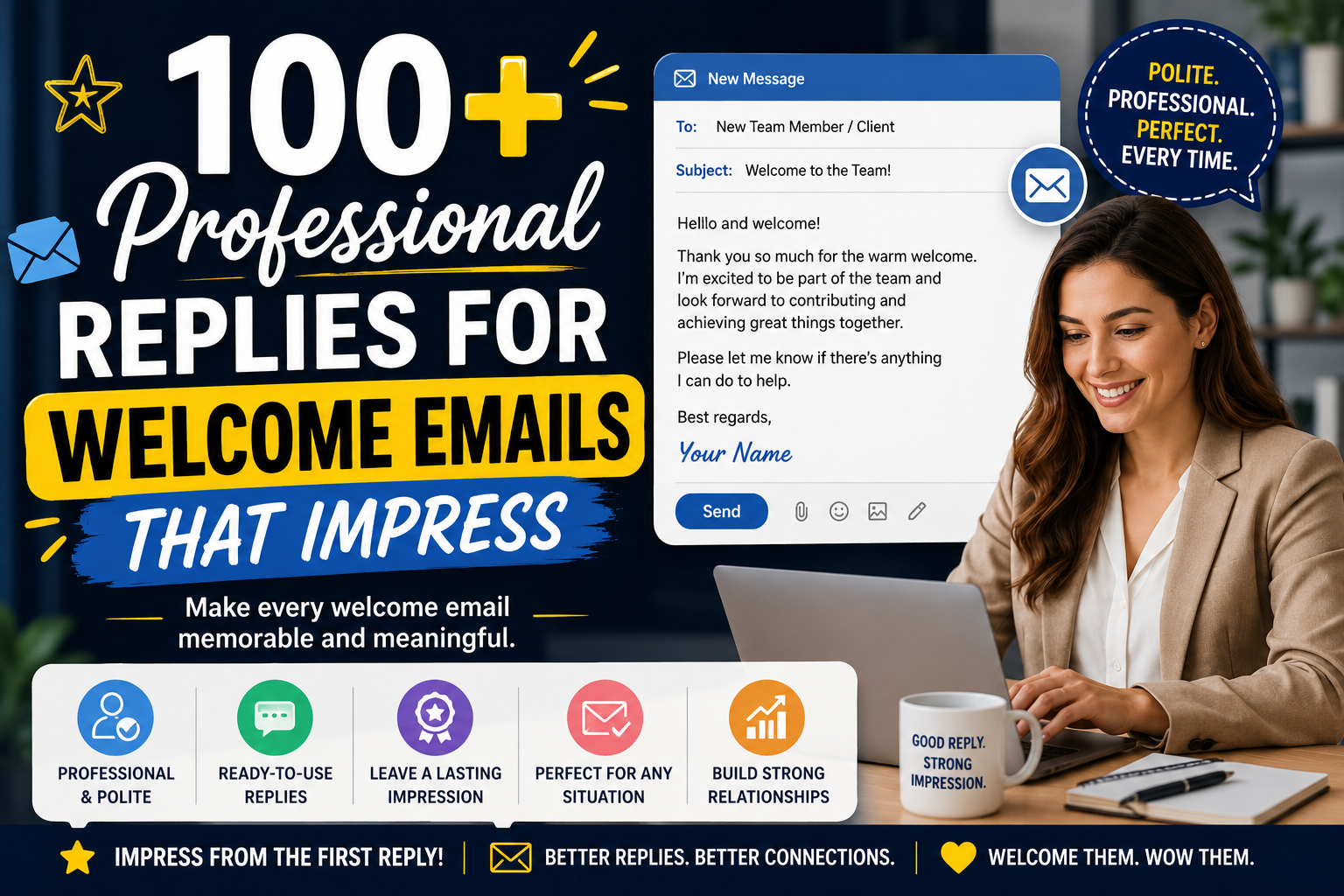
A welcome email is often your first official interaction with your new workplace. How you reply sets the tone for your professional relationships, communication style, and attitude toward the role. A thoughtful response shows appreciation, confidence, and readiness to begin check more here : 100+ Good Evening Love Messages for Her
What Is a Welcome Emails and Why It Matters
Meaning of a Welcome Email in the Workplace
A welcome email is a professional message sent to greet a new employee or team member. It typically expresses enthusiasm, introduces the role, and helps the new hire feel included from day one.
Who Usually Sends Welcome Emails (HR, Manager, Team)
Welcome emails may come from HR during onboarding, from your manager welcoming you to the role, or from team members introducing themselves. Each sender reflects a different relationship, which should guide how you respond.
Why Replying to a Welcome Email Is Important
Replying acknowledges the message, shows courtesy, and signals professionalism. It reassures the sender that you are engaged, appreciative, and prepared to contribute.
Why You Should Reply to a Welcome Email
Creating a Positive First Impression
Your reply helps shape how colleagues and managers perceive you. A clear, polite response immediately positions you as respectful and professional.
Showing Professionalism and Gratitude
Expressing thanks demonstrates emotional intelligence and workplace etiquette. Gratitude builds goodwill before you even start working.
Building Early Rapport With the Team
Early communication fosters connection. Even a brief reply helps break the ice and makes future collaboration smoother.
How to Reply to a Welcome Email Professionally
Acknowledging the Welcome Message
Begin by acknowledging the message directly. This shows you read and appreciated the effort taken to welcome you.
Expressing Appreciation for the Opportunity
Thanking the sender for the opportunity reinforces positivity and respect for the role and organization.
Showing Enthusiasm to Join the Team
Professional enthusiasm—without exaggeration—signals motivation and readiness to contribute.
Keeping the Reply Concise and Polite
A welcome email reply should be brief and focused. Clear, polite language leaves a strong impression without overwhelming the reader.
Reply for Welcome Email (By Tone)
Professional and Polite Welcome Email Replies
Formal Workplace Tone
These replies use structured sentences and neutral language. They are ideal for corporate environments or senior leadership communication.
Manager and HR-Friendly Responses
Professional replies reassure managers and HR that you understand workplace norms and are ready to begin responsibly.
Warm and Grateful Welcome Email Replies
Thank-You Focused Replies
These responses highlight appreciation and recognition, making them ideal when the welcome message feels personal or encouraging.
Appreciation-Driven Language
Warm wording builds connection while still maintaining professionalism.
Friendly Welcome Email Replies
Light but Respectful Tone
Friendly replies balance approachability with respect. They work well for teams with relaxed but professional cultures.
Team-Oriented Responses
Mentioning collaboration and teamwork shows alignment with company values and group dynamics.
Short and Simple Welcome Email Replies
One-Paragraph Replies
Short replies work well when time is limited or the welcome message was brief.
Quick Acknowledgment Emails
These replies efficiently confirm receipt and appreciation without unnecessary detail.
Reply to Welcome Aboard Email (By Situation)
Reply to Welcome Email From Manager
Respectful and Professional Wording
A manager-focused reply should acknowledge leadership and express readiness to contribute.
Expressing Eagerness to Work
Subtle enthusiasm reassures your manager that you’re motivated and committed.
Reply to Welcome Email From HR
Acknowledging Onboarding Support
Thanking HR for guidance shows professionalism and cooperation.
Confirming Readiness to Start
This reinforces clarity and reliability during the onboarding process.
Reply to Welcome Email From Team or Colleagues
Friendly and Inclusive Tone
Team replies should feel warm and collaborative without being overly casual.
Team-Bonding Language
Expressing excitement to work together helps build rapport early.
Reply to Company-Wide Welcome Email
Neutral but Appreciative Reply
When a welcome email is sent to the entire company or department, your reply should stay neutral and appreciative. The goal is to acknowledge the message without drawing unnecessary attention to yourself. A short, polite response reflects professionalism and respect for the broader audience.
Professional Group Response
In most cases, replying briefly—or replying privately to the sender instead of the entire group—is the safest choice. If you do reply to all, keep the tone formal, concise, and inclusive.
Welcome Email Reply Examples for New Employees
First-Day Welcome Email Reply
A first-day reply should acknowledge the welcome and express readiness to begin. This reassures the team that you’re engaged and prepared.
New Job Welcome Email Reply
For a new role, your reply should combine gratitude with enthusiasm. This helps establish a positive working relationship from the start.
Remote Job Welcome Email Reply
Remote welcome replies should emphasize connection and collaboration. Since you may not meet colleagues in person immediately, tone and clarity matter even more.
Common Mistakes to Avoid When Replying to a Welcome Email
Being Too Casual or Informal
Overly casual language can feel unprofessional, especially early in your role. It’s better to stay slightly formal until you understand the company culture.
Writing an Overly Long Reply
A welcome email reply doesn’t need a full paragraph explaining your background or goals. Long replies can feel unnecessary and distracting.
Forgetting to Thank the Sender
Failing to express appreciation can come across as indifferent. A simple thank-you goes a long way.
Using Generic or Copied Responses
Overly generic replies feel impersonal. Even a small personalization makes your response sound genuine.
Should You Reply All or Reply Privately?
When “Reply All” Is Appropriate
Reply all is appropriate when the welcome message invites a group response or when replying is expected as part of team etiquette.
When Private Replies Are Better
If the message is sent company-wide or to a large group, a private reply to the sender is often more professional and less disruptive.
Workplace Etiquette Tips
When in doubt, choose the option that minimizes inbox clutter and maintains professionalism.
Welcome Email Reply vs Thank-You Email
Key Differences
A welcome email reply acknowledges being welcomed. A thank-you email often follows later and reflects deeper appreciation after interaction.
When to Send Each
Reply to the welcome email promptly. Send a thank-you email after onboarding, meetings, or support.
How They Work Together
Together, these messages reinforce gratitude, professionalism, and strong communication habits.
Why a Good Welcome Email Reply Helps Your Career
First Impressions at Work
Early communication sets expectations. A thoughtful reply signals professionalism and reliability.
Building Professional Reputation
Consistent, respectful communication helps build trust and credibility with colleagues and leadership.
Establishing Positive Communication Habits
Strong communication from day one creates a foundation for future interactions.
Conclusion
A well-written reply to a welcome email may seem small, but it plays a big role in shaping first impressions. With the right tone—professional, appreciative, and concise—you set yourself up for positive working relationships and a strong start in your new role.
FAQs
How to reply to a welcoming email?
Acknowledge the message, thank the sender, and express enthusiasm professionally.
How to reply “you’re welcome” professionally?
Use polite language such as “You’re very welcome” or “Happy to help.”
How do I reply for welcome back?
Thank the sender and briefly acknowledge your return with a positive tone.
How to give a perfect reply?
Keep it concise, polite, appreciative, and aligned with workplace tone.