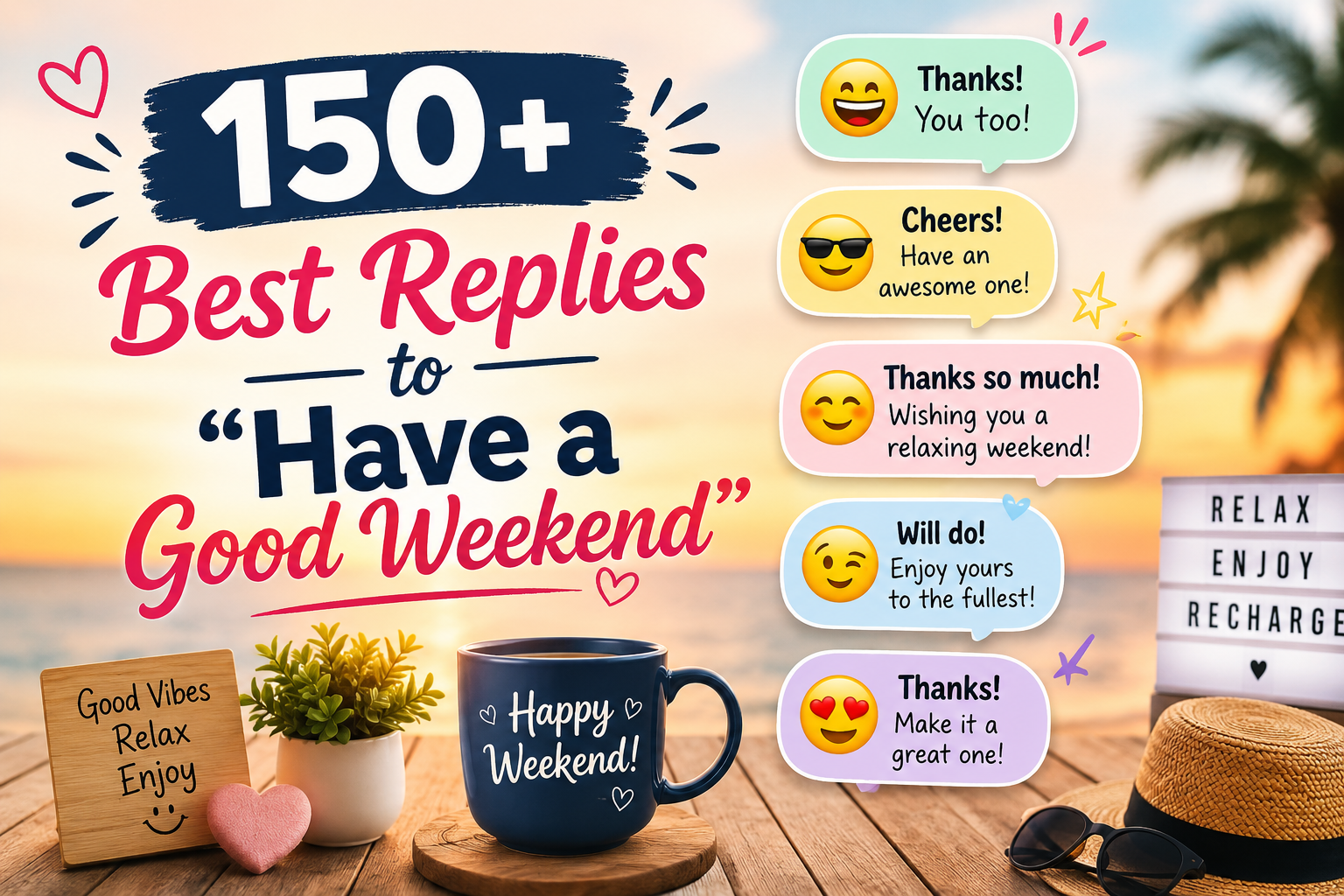
“Have a good weekend” seems simple, but the reply you choose can quietly shape how the conversation ends—or continues. It can signal professionalism, warmth, interest, gratitude, or even flirtation. The right response depends on who said it, how they said it, and what you want to happen next. Below is a complete guide to understanding the meaning behind the phrase and choosing a reply that fits the moment perfectly check more here : 300+ Flirty & Smart Replies to “I Want You” Tex
What “Have a Good Weekend” Really Means (Context & Intent)
Casual Sign-Off vs. Genuine Care
Sometimes it’s just a polite closer—especially at work or in passing conversations. Other times, it’s a small but genuine gesture of care that invites warmth in return. The difference usually shows up in timing, tone, and whether the person adds anything personal.
Professional vs. Personal vs. Flirty Variations
In professional settings, it’s a clean, friendly boundary marker. With friends, it’s relaxed and social. With someone you’re dating or interested in, it can be a soft opener for connection, signaling interest without pressure.
Why People Say It (Social Bonding & Politeness Psychology)
Weekend wishes act as social glue. They acknowledge shared time, signal goodwill, and close interactions on a positive note. Responding well reinforces rapport and leaves a good final impression.
150+ Best Replies to “Have a Good Weekend” (Categorized)
Short & Simple Polite Replies (Safe & Professional)
- Thank you, you too.
- Thanks—hope you do as well.
- Will do, thanks.
- Appreciate it.
- Same to you.
- Thanks!
- You too—take care.
- Much appreciated.
- Thanks, enjoy yours.
- Thank you, have a great one.
- Thanks—have a good one.
- Will do.
- Thank you kindly.
- Thanks, enjoy.
- You as well.
Warm & Friendly Responses (Friends & Coworkers)
- Thanks! Hope you have a great weekend too.
- Appreciate it—enjoy your time off.
- Thanks! Any fun plans?
- You too—hope it’s relaxing.
- Thanks! Hope you get some rest.
- Same to you—have fun.
- Thanks! Wishing you a good one.
- You too—hope it’s a good break.
- Thanks! Catch up next week.
- Appreciate it—enjoy the weekend vibes.
- Thanks! Hope it’s a good reset.
- You too—enjoy every minute.
- Thanks! Let’s talk soon.
- Appreciate it—hope it treats you well.
- Thanks! Fingers crossed for good weather.
Fun & Playful Replies (Casual Banter)
- I plan on it.
- That’s the goal.
- Definitely trying to.
- Oh, I will.
- Already counting on it.
- Weekend mode: activated.
- You know it.
- Doing my best.
- Absolutely—no complaints planned.
- I intend to.
- That’s the plan.
- Looking forward to it.
- Same energy to you.
- Let’s hope so.
- Making it happen.
Flirty & Teasing Comebacks (Crush or Dating)
- I will—especially if you do.
- I might… depends on how interesting it gets.
- I plan to. What about yours?
- I’ll try—any recommendations?
- Better if I hear from you.
- I’m hoping it’s memorable.
- That depends—are you part of it?
- I think I will now.
- Only if you promise the same.
- I’ll do my best.
- I might need company.
- Let’s see where it goes.
- Sounds like a good idea.
- I’m already smiling about it.
- I’m open to suggestions.
Grateful & Reciprocal Replies (Show Appreciation)
- Thank you—that means a lot.
- I appreciate that. You too.
- Thanks for thinking of me.
- That’s kind—hope yours is great.
- Thanks! I hope you enjoy yours as well.
- Appreciate the good wishes.
- Thank you—same to you.
- That’s nice of you.
- Thanks—wishing you a relaxing weekend.
- I appreciate it—have a great one.
- Thank you kindly.
- Thanks so much.
- That’s thoughtful—hope you enjoy it.
- Thanks! All the best for yours.
- Appreciate it—take care.
Humorous & Witty One-Liners
- I’ll try not to mess it up.
- That’s the plan—wish me luck.
- I’ll do my best under the circumstances.
- Challenge accepted.
- I intend to behave… mostly.
- Fingers crossed.
- I’ll report back Monday.
- I’ll do my part.
- Hoping for minimal chaos.
- I’ll aim for “good,” maybe “great.”
- I’ll see what I can do.
- I’m optimistic.
- I’ll give it my best effort.
- Weekend loading…
- I’m counting on it.
Romantic & Sweet Responses (Partner or Someone Special)
- I will—thinking of you.
- I hope yours is just as nice.
- It’s already better hearing from you.
- I will—miss you.
- I’m looking forward to it, especially with you in mind.
- I hope we both get a little happiness.
- I will. Can’t wait to talk.
- I hope yours feels peaceful and warm.
- I’ll enjoy it more knowing you care.
- I hope we both relax and smile.
- I’ll try—wish you were here.
- It’s already off to a good start.
- I hope yours is as lovely as you are.
- I will. Talk soon.
- I’m glad you said that.
Professional & Polished Replies (Work/LinkedIn)
- Thank you—wishing you a great weekend as well.
- Much appreciated. Enjoy your weekend.
- Thank you. Looking forward to reconnecting next week.
- Appreciate it—hope you have a restful break.
- Thanks, and best wishes for the weekend.
- Thank you—have a pleasant weekend.
- Much appreciated. Enjoy the time off.
- Thanks—speak soon.
- Thank you. Hope it’s a good one.
- Appreciate it—enjoy your weekend ahead.
- Thanks—have a relaxing weekend.
- Thank you kindly.
- Appreciate it—see you next week.
- Thanks, wishing you well.
- Much appreciated—enjoy.
Text-Friendly Short Replies with Emojis
- Thanks!
- You too!
- Appreciate it
- Same to you
- Will do
- Definitely
- Hopefully
- Thanks—enjoy
- Weekend mode
- I plan to
- Thanks a lot
- Sounds good
- Looking forward to it
- Cheers
- Enjoy yours
Longer, Thoughtful Weekend Wish-Back Messages
- Thank you! I hope you get some real rest and enjoy your weekend.
- Thanks—I’m looking forward to slowing down a bit. Hope you do too.
- Appreciate it. Wishing you a peaceful and refreshing weekend ahead.
- Thanks! Hope you get time to relax and do something you enjoy.
- Thank you—hope your weekend is exactly what you need it to be.
- I appreciate that. Enjoy the break and recharge well.
- Thanks! Looking forward to catching up next week.
- That’s kind—hope your weekend is full of good moments.
- Thanks! Hope it’s a great balance of rest and fun.
- Appreciate it—wishing you a smooth and happy weekend.
How to Choose the Perfect Reply (Step-by-Step)
Step 1 – Identify the Relationship & Context
Ask who it’s coming from: boss, coworker, friend, partner, or someone new. Your reply should match the closeness and setting.
Step 2 – Match Their Tone & Energy Level
If they’re formal, keep it polished. If they’re warm or playful, you can mirror that tone to build rapport.
Step 3 – Decide Your Goal (Polite Close, Keep Talking, Flirt)
Do you want to end the conversation cleanly, continue chatting, or signal interest? Choose a reply that serves that goal.
Step 4 – Add Personal Touch or Emoji for Warmth
A small detail—like mentioning rest, plans, or appreciation—can turn a generic reply into a memorable one.
When & How to Reply for Maximum Impact
Best Timing (Friday Afternoon vs. Evening)
Friday afternoon replies often work best short and professional. Evening or later replies can be warmer or more personal, depending on the relationship.
Professional Etiquette – Don’t Overdo It
In work contexts, one clean sentence is enough. Overly enthusiastic or personal replies can feel out of place.
Turning It Into Continued Conversation
If you want to keep chatting, add a gentle opener: “Any plans?” or “Doing anything fun?” Keep it optional, not demanding.
Knowing When to Leave It Short & Sweet
If the message feels like a sign-off, respect that. A simple “Thanks, you too” is often the most appropriate response.
Expert Tips to Make Your Replies Stand Out
Personalizing with Specific Weekend Plans
Mentioning something light like rest, travel, or a hobby adds authenticity without oversharing.
Adding Humor or Inside References
With friends or partners, inside jokes or shared references make your reply feel special and connected.
Common Mistakes to Avoid (Too Formal, Too Flirty at Work)
Avoid mismatched tone, forced humor, or flirting in clearly professional settings. When in doubt, keep it neutral.
Using Emojis, GIFs & Voice Notes Effectively
Use them sparingly and only when appropriate. One well-placed emoji can soften tone; too many can feel unprofessional.
Cultural Differences in Weekend Wishes
In some cultures, weekend wishes are purely polite; in others, they’re warmer. Observing how others respond can guide you.
Quick-Reference Reply Cheat Sheet by Situation
Coworker / boss (Friday email or chat)
- “Thank you—enjoy your weekend.”
- “Much appreciated. See you next week.”
Friend or group chat
- “Thanks! You too—any plans?”
- “Weekend mode on.”
New crush / dating app
- “I will—what about yours?”
- “I plan to. Any recommendations?”
Long-term partner
- “I will—miss you already.”
- “Hope yours is relaxing, love.”
Client or customer service
- “Thank you. Wishing you a great weekend as well.”
- “Much appreciated—enjoy.”
Someone you barely know
- “Thanks, you too.”
- “Appreciate it.”
After a long week of venting
- “Thank you—I really needed that.”
- “I’m hoping for a calm one.”
Final Thoughts – End Every Week on a High Note
A thoughtful reply to “Have a good weekend” doesn’t take much effort, but it can leave a lasting impression. Whether you keep it professional, friendly, playful, or romantic, the best response is one that fits the moment and feels natural to you. End the week kindly, and you set the tone for what comes next.
FAQs
How do you respond to “have a good day”?
You can reply with something simple and polite like “Thank you, you too,” or make it warmer with “Thanks—hope your day goes well too.” Match the tone to the setting and your relationship.
How is the weekend reply?
A good weekend reply is short, friendly, and reciprocal. Phrases like “Thanks! You too,” or “Appreciate it—hope you enjoy yours” work in most situations, while closer relationships can add warmth or humor.
What to say to “have a good weekend”?
Common replies include “Thank you, you too,” “Thanks—hope you have a great weekend,” or “Appreciate it, enjoy your time off.” Choose based on how formal or casual the situation is.
How do I thank someone for a good weekend?
You can say “Thank you, I really enjoyed it,” “Thanks for the great weekend,” or “I appreciate you—it was a wonderful weekend.” Adding a specific detail makes it more personal.