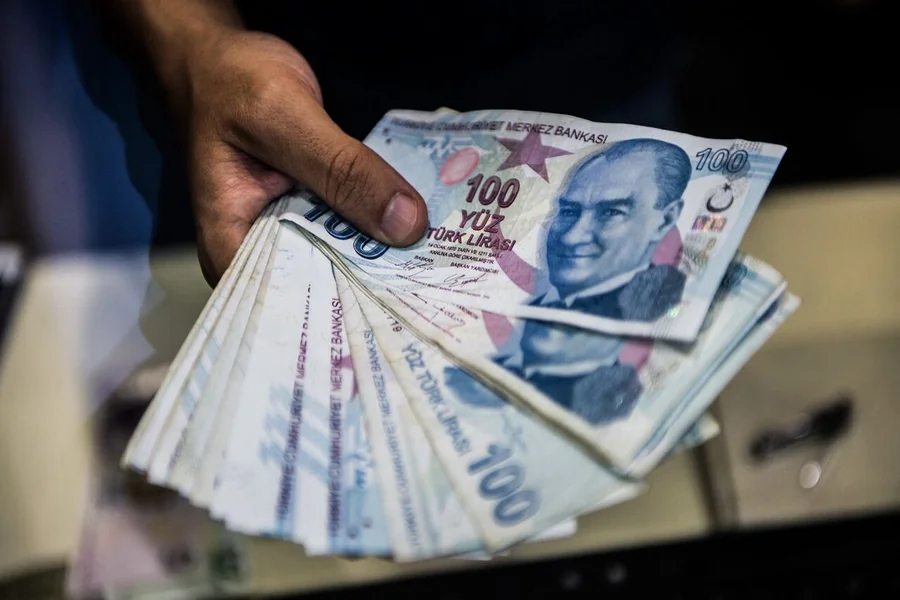
When the Central Bank announces unexpected interest rate hike decisions, the financial world immediately takes notice. This sudden shift in monetary policy has sent ripples through global markets, catching investors, consumers, and corporate leaders entirely off guard. For months, analysts had widely predicted that rates would remain steady—or perhaps even decrease—making this sudden tightening a massive focal point for economic discussions. Central banks use interest rates as their primary tool to control economic growth and manage inflation. By raising the cost of borrowing money overnight, the institution is sending a clear and uncompromising message: taming the economy is currently a higher priority than facilitating cheap credit. This aggressive maneuver forces a rapid reassessment of financial strategies across the board, from massive institutional hedge funds down to everyday families trying to manage their monthly household budgets. Understanding the mechanics behind this decision is crucial for anyone looking to navigate the complex financial landscape that lies ahead.
The Ripple Effect on Consumers and Borrowers
The most immediate and tangible impact of a sudden rate increase is felt directly in the wallets of average consumers. When the baseline cost of borrowing money increases, commercial banks waste no time passing those elevated costs down to their retail customers. If you currently hold variable-rate debt, the financial landscape has just shifted beneath your feet. Credit card annual percentage rates (APRs), which are notoriously sensitive to federal policy changes, will likely climb within the next billing cycle. This means that carrying a month-to-month balance will become noticeably more expensive, effectively draining more of your disposable income into interest payments rather than principal reduction.
Mortgage markets also experience violent recalibrations following such announcements. For prospective homebuyers, an unexpected hike can instantly alter purchasing power. A difference of just half a percentage point on a 30-year fixed mortgage can add tens of thousands of dollars in interest over the life of the loan, frequently pushing marginal buyers out of the market entirely. Those who currently hold adjustable-rate mortgages (ARMs) or home equity lines of credit (HELOCs) will see their monthly payments adjust upward, straining household cash flow.
Auto loans and personal loans are not immune to these shifts either. Dealerships that rely on promotional low-interest financing to move inventory may find it incredibly difficult to maintain those offers. Consequently, the cost of acquiring a new vehicle rises, which can depress consumer spending in the automotive sector. On the flip side, this environment does offer a silver lining for dedicated savers. High-yield savings accounts, certificates of deposit (CDs), and money market accounts generally see their yields rise in tandem with the central bank’s baseline rate. After years of near-zero returns on cash deposits, savers finally have the opportunity to generate meaningful, risk-free yield on their liquid assets.
How Financial Markets Are Reacting
Wall Street operates on deeply ingrained expectations, and nothing disrupts algorithmic trading models and investor sentiment quite like a surprise from monetary policymakers. Equities typically experience immediate volatility when borrowing costs rise unexpectedly. Growth stocks, particularly those in the technology and consumer discretionary sectors, are highly vulnerable. The valuations of these companies are largely based on future cash flows; when the discount rate used to calculate the present value of those future earnings increases, the stock’s current fundamental value inherently drops. Consequently, markets often witness sharp sell-offs in high-growth equities as capital rotates into more defensive, dividend-yielding sectors like utilities, healthcare, and consumer staples.
The bond market acts as the true barometer of economic sentiment during these tightening cycles. As new bonds are issued with higher yields to match the central bank’s updated rate, existing bonds with lower yields lose their appeal, causing their prices to fall. This inverse relationship between bond prices and yields creates a highly complex environment for fixed-income investors. Furthermore, analysts closely monitor the yield curve—the difference in yields between short-term and long-term government debt. An unexpected rate hike can lead to a flattening or inversion of this curve, a scenario historically viewed as a leading indicator of an impending economic recession.
Currency markets also experience immediate shockwaves. Higher interest rates typically attract foreign capital seeking better returns on safe-haven assets. This influx of capital naturally strengthens the domestic currency relative to global peers. While a strong currency benefits consumers by making imported goods cheaper, it acts as a severe headwind for multinational corporations. Their exported goods become more expensive and less competitive on the global stage, and the foreign revenue they generate translates back into fewer domestic dollars, potentially compressing corporate profit margins for the upcoming fiscal quarters.
What This Means for Inflation and the Economy
To understand why monetary authorities risk causing so much market disruption, one must look at the underlying macroeconomic data that triggered the move. An unexpected rate hike is rarely executed without serious cause; it is almost always a direct response to inflation metrics that are running hotter, or proving more stubborn, than policymakers originally modeled. The primary mandate of the central bank is to maintain price stability, and when core inflation—which strips out volatile food and energy prices—refuses to cool down to the target rate, aggressive intervention becomes mathematically necessary.
The mechanical goal of raising rates is to deliberately slow down the velocity of money in the economy. By making credit more expensive, businesses are less likely to take out massive loans for capital expansion, hiring sprees, or inventory accumulation. Consumers, facing higher borrowing costs, are theoretically supposed to rein in their spending on big-ticket items like houses, cars, and luxury goods. This synchronized reduction in aggregate demand is designed to give strained supply chains the breathing room they need to catch up, ultimately bringing the prices of goods and services back down to earth.
However, this strategy requires navigating an incredibly narrow economic runway. The central bank is attempting to orchestrate a “soft landing”—cooling down inflation without triggering mass layoffs or a deep economic contraction. Because monetary policy works with a notorious lag time, the full macroeconomic effects of today’s rate hike may not be visible in employment or GDP data for another six to twelve months. The inherent danger of an unexpected hike is the risk of overtightening. If the authorities restrict the money supply too aggressively, they could inadvertently choke off corporate growth entirely, leading to hiring freezes, layoffs, and a self-fulfilling recessionary cycle.
Strategies to Protect Your Personal Finances
In an environment characterized by rising borrowing costs and market unpredictability, passive financial management is no longer a viable strategy. Consumers must take proactive, defensive steps to insulate their household balance sheets from the downstream effects of monetary tightening. The very first priority should be aggressively tackling high-interest variable debt. Because credit card rates will rapidly adjust upward, transferring balances to fixed-rate personal loans or zero-percent introductory APR credit cards can lock in a manageable payment plan before the environment worsens.
For homeowners with variable-rate mortgages, the window to refinance into a fixed-rate product is rapidly closing, but it may still be a mathematically sound decision depending on the individual’s long-term housing plans. Locking in a rate, even if it is slightly higher than historical lows, provides critical budgetary certainty in an uncertain world. Conversely, if you are actively shopping for a home, you must heavily scrutinize your budget. You should calculate potential monthly payments at rates that are one or two percentage points higher than current offerings to ensure you do not become “house poor” if rates continue to climb.
This is also the optimal time to optimize your cash reserves. Because banks are finally paying respectable yields on deposits, leaving emergency funds in legacy checking accounts that pay zero percent interest is a missed opportunity. Moving liquid assets into high-yield savings accounts, money market funds, or laddered Certificates of Deposit (CDs) ensures that your money is working for you and partially offsetting the corrosive effects of inflation. On the investing front, maintaining a diversified portfolio and employing dollar-cost averaging—investing a set amount of money at regular intervals—can help smooth out the extreme volatility currently plaguing the equity markets.
FAQs
What is the main reason a central bank raises interest rates? A central bank typically raises interest rates to combat high inflation by making borrowing more expensive, which slows down consumer spending and cools economic growth.
How does an unexpected rate hike affect my current fixed-rate mortgage? An unexpected rate hike does not affect your current fixed-rate mortgage because the interest rate and monthly payments are permanently locked in for the life of the loan.
Will credit card debt become more expensive due to this policy change? Yes, credit card debt will become more expensive because most credit cards have variable annual percentage rates that are directly tied to the central bank’s baseline interest rate.
What is the safest place to put my money during a period of rising rates? High-yield savings accounts and certificates of deposit are generally the safest places to put your money because they offer guaranteed returns that typically increase alongside federal rate hikes.
Why do stock markets often fall immediately after an unexpected rate increase? Stock markets often fall because higher borrowing costs reduce corporate profitability and make risk-free assets like government bonds more attractive to investors compared to volatile stocks.
Final Thought
When the Central Bank announces unexpected interest rate hike decisions, it fundamentally rewrites the rules of engagement for the global economy. While the immediate shockwaves translate into stock market volatility and higher borrowing costs for everyday consumers, it is vital to remember that these measures are instituted to protect the long-term purchasing power of the currency. The transition period can undoubtedly be painful, requiring families and businesses to rapidly adjust their budgets and dial back their leverage. However, by remaining informed, aggressively managing variable debt, and capitalizing on the higher yields available for saved cash, individuals can successfully weather the storm. Financial resilience is built during periods of uncertainty, and proactive planning today will yield significant dividends when the economic climate eventually stabilizes.