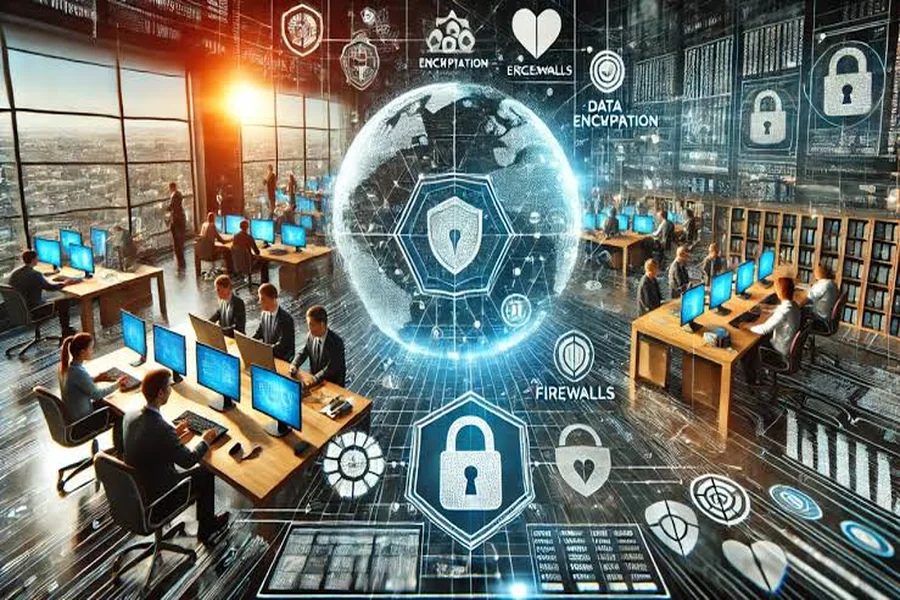
We are living through an era of unprecedented technological integration where every device, server, and user is linked in a massive global network. From the smart appliances running our homes to the complex cloud infrastructures powering international finance, the digital threads of modern society are woven tighter than ever before. While this remarkable level of connectivity brings incredible convenience, speed, and efficiency, it also exposes us to a landscape fraught with dangerous vulnerabilities. Today, establishing The Cybernetic Citadel: Securing Data in an Interconnected World is not just a recommended best practice for tech-forward enterprises; it is a fundamental, non-negotiable necessity for any organization or individual operating online. Building this impenetrable digital fortress requires much more than simply installing an antivirus program or setting up a basic firewall. It demands a holistic approach to network architecture, a deep understanding of sophisticated threat vectors, and a relentless, ongoing commitment to adaptability. As our physical and digital realities continue to seamlessly merge, the blueprint for keeping our most valuable and sensitive information out of the hands of malicious actors must evolve accordingly. The concept of a digital fortress is no longer about building a single, static wall around a network, but rather creating a dynamic, intelligent ecosystem that can identify, isolate, and neutralize threats in real time.
The Evolution of Digital Threats
In the early days of the internet, cybersecurity was a relatively straightforward endeavor. Threats typically consisted of rudimentary viruses created by amateur hackers looking for notoriety rather than financial gain. A strong perimeter defense was usually enough to keep these basic nuisances at bay. However, as the digital landscape has expanded, so too has the sophistication, funding, and ambition of cybercriminals. Today, we face a highly organized, heavily financed underworld of digital espionage, state-sponsored attacks, and sprawling ransomware syndicates. These modern adversaries do not just want to disrupt systems; they want to steal intellectual property, hijack critical infrastructure, and extort millions of dollars from vulnerable targets. The proliferation of the Internet of Things (IoT) has dramatically expanded the attack surface, meaning that every internet-connected device—from a smart thermostat to an industrial sensor—can potentially serve as a backdoor into a secure network. Furthermore, the shift toward remote work and distributed cloud environments has completely dissolved the traditional corporate network perimeter. Hackers no longer need to break through the front door of an office building’s network; they can simply target an employee’s unsecured home router or intercept data packets in transit. This rapid evolution of digital threats necessitates a complete paradigm shift in how we approach data security, forcing security professionals to assume that the network is always under hostile contact.
Core Pillars of Modern Cyber Defense
To construct a resilient digital fortress in today’s environment, organizations must rely on multiple overlapping layers of defense, much like the walls, moats, and guards of an ancient physical citadel. The first and most critical pillar is robust encryption, both for data at rest and data in transit. Even if a malicious actor manages to intercept a data stream or infiltrate a database, strong encryption ensures that the stolen information remains completely unreadable and useless to them. Another foundational pillar is comprehensive endpoint protection. Because the modern workforce is highly mobile, every laptop, smartphone, and tablet used to access company resources represents a potential vulnerability. Advanced endpoint detection and response systems monitor these devices constantly, searching for anomalous behavior that might indicate a compromise. Network segmentation is also vital to a modern defense strategy. By dividing a massive network into smaller, isolated sub-networks, security teams can contain breaches and prevent lateral movement. If a hacker manages to compromise a low-level system, network segmentation ensures they cannot easily pivot to access highly sensitive financial databases or administrative controls. Finally, consistent and automated patch management serves as the mortar holding these defensive pillars together. Many of the most devastating cyberattacks in recent history exploited known software vulnerabilities that organizations had simply neglected to patch. Keeping all systems, applications, and firmware meticulously updated is a fundamental requirement for maintaining the structural integrity of your digital defenses.
Why the Zero Trust Model is Essential
The traditional approach to cybersecurity operated on a “castle-and-moat” philosophy: once a user made it past the outer firewall and was inside the network, they were implicitly trusted and granted broad access. This outdated model is incredibly dangerous in an interconnected world where credentials are stolen daily. The modern gold standard for data security is the Zero Trust architecture, which operates on the guiding principle of “never trust, always verify.” In a Zero Trust environment, no user, device, or application is inherently trusted, regardless of whether they are located inside or outside the corporate network. Every single request for access must be thoroughly authenticated, authorized, and continuously validated before any data is exchanged. This involves stringent identity verification processes, such as mandatory multi-factor authentication (MFA) and biometric scans. Furthermore, Zero Trust relies heavily on the principle of least privilege, meaning users are granted only the absolute bare minimum level of access required to perform their specific job functions. If an employee’s account is compromised by a hacker, the damage they can inflict is severely limited because their access rights are tightly constrained. Implementing a Zero Trust framework requires a significant cultural and technical shift, but it is the most effective way to adapt to a reality where the traditional network perimeter no longer exists.
Artificial Intelligence as a Security Shield
As cyber threats become faster and more complex, human security teams can no longer keep up with the sheer volume of data and alerts generated by modern networks. This is where Artificial Intelligence (AI) and Machine Learning (ML) step in as indispensable components of the cybernetic citadel. AI-powered security systems can ingest and analyze millions of data points in real time, identifying subtle patterns and microscopic anomalies that a human analyst would likely miss. For example, if an employee who typically logs in from New York at 9:00 AM suddenly attempts to download a massive database from an IP address in Eastern Europe at 3:00 AM, an AI system can instantly flag this behavioral anomaly and automatically freeze the account. These intelligent systems are not just reactive; they are highly proactive. Machine learning algorithms continuously study the network’s baseline behavior, getting smarter and more precise at detecting deviations over time. However, it is crucial to recognize that AI is a double-edged sword. Just as security professionals use AI to defend networks, cybercriminals are increasingly leveraging AI to automate their attacks, generate hyper-realistic deepfakes, and write polymorphic malware that changes its code to evade traditional antivirus software. To maintain the high ground, organizations must ensure their defensive AI capabilities are consistently trained, updated, and integrated with human oversight to outmaneuver these intelligent, automated threats.
The Human Element in Data Protection
Despite the incredible advancements in firewalls, encryption, and artificial intelligence, the single greatest vulnerability in any digital fortress remains the human element. Cybercriminals are well aware that it is much easier to trick a person into handing over a password than it is to brute-force a complex encryption algorithm. Social engineering tactics, particularly phishing and spear-phishing campaigns, remain the most common and successful methods for breaching secure networks. Attackers craft highly persuasive emails, text messages, and phone calls disguised as legitimate communications from trusted colleagues, banks, or vendors, tricking employees into clicking malicious links or downloading malware. Therefore, building a robust cyber defense requires prioritizing comprehensive, ongoing employee education. Organizations must foster a pervasive culture of security where every individual understands their role as a human firewall. Training programs cannot be reduced to a once-a-year seminar; they must involve regular, simulated phishing attacks, engaging workshops on modern threat tactics, and clear, penalty-free reporting procedures for suspicious activity. When employees are taught how to scrutinize unexpected requests, verify sender identities, and practice excellent password hygiene, they transform from the network’s weakest link into its strongest, most vigilant line of defense.
Final Thought
Constructing a resilient defense for our data is not a one-time project with a definitive finish line; it is a dynamic, continuous journey of adaptation and vigilance. As long as technology continues to advance, malicious actors will tirelessly seek out new methods to exploit it. By combining cutting-edge frameworks like Zero Trust and AI-driven monitoring with a deeply ingrained culture of human awareness, organizations can establish a formidable defense system. The interconnected nature of our world brings immense opportunity, but it demands an equally immense commitment to security. Protecting our digital assets requires foresight, investment, and the unwavering understanding that in the realm of cybersecurity, complacency is the ultimate enemy.
FAQs
What is the Zero Trust security model? The Zero Trust model is a modern cybersecurity framework based on the principle of “never trust, always verify.” It assumes that threats can originate from both outside and inside a network, requiring strict identity verification and granting minimal access privileges for every user and device requesting access.
How does artificial intelligence help in protecting data? Artificial intelligence helps protect data by rapidly analyzing vast amounts of network traffic to detect unusual patterns and behavioral anomalies that human analysts might miss. AI can instantly flag potential breaches, automate immediate defensive responses, and continuously learn from new data to predict and prevent future attacks.
Why are human employees considered the biggest security risk? Human employees are often considered the biggest security risk because they can be manipulated through social engineering tactics like phishing. Attackers find it much easier to trick a person into willingly handing over login credentials or clicking a malicious link than to bypass complex technical security measures.
What role does network segmentation play in cybersecurity? Network segmentation involves dividing a large computer network into smaller, isolated sections to improve security and performance. If a cybercriminal breaches one segment of the network, segmentation prevents them from easily moving laterally to access other sensitive areas or critical databases.
How often should a company update its cybersecurity training for employees? A company should update and conduct its cybersecurity training continuously throughout the year rather than relying on an annual seminar. Regular training, which includes simulated phishing tests and updates on the latest scam tactics, is necessary to keep security top-of-mind and adapt to rapidly evolving threats.