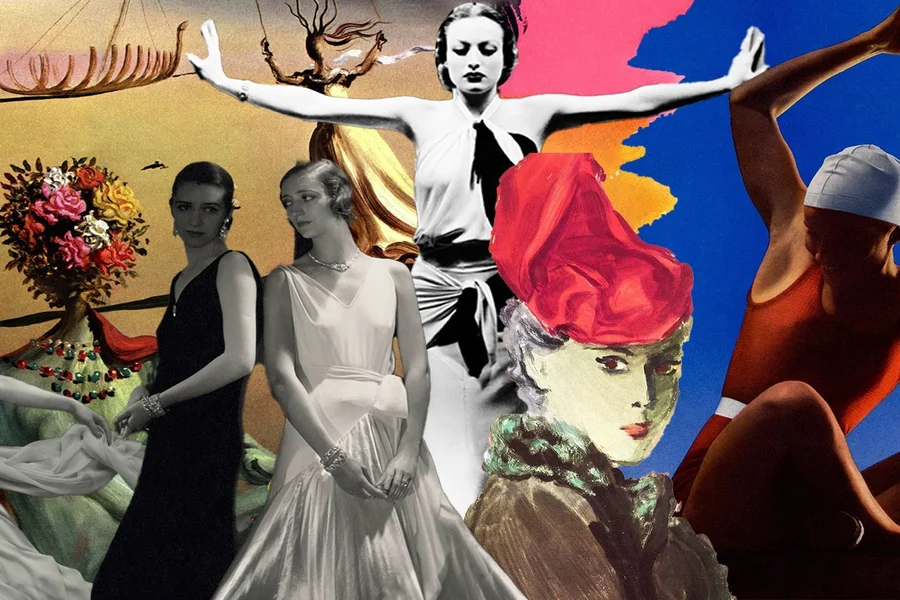
Clothing is far more than a basic human necessity or a mere covering draped over our bodies; it is a vivid, living canvas of human civilization. When we look back at the garments worn by our ancestors, we are not just examining old textiles and faded fabrics, but rather deciphering a silent, intricate language of status, culture, economics, and technological innovation. The Threads of Time: A Journey Through Fashion History reveals how practical necessity slowly but surely blossomed into an expressive art form that defines who we are as individuals and societies. From the meticulously draped linens of ancient pharaohs to the highly conceptual, digital wearables of the modern era, the evolution of our clothing tells the sweeping story of human progress. Every single stitch, choice of dye, and silhouette offers a fascinating glimpse into the societal norms, power structures, and technological advancements of its specific era. As we weave our way through different historical epochs, we begin to see that style is not linear; rather, it is a continuous, fascinating loop of inspiration, rebellion, and reinvention. Understanding what people wore centuries ago helps us understand how they lived, how they loved, and how they saw their place in the universe. It is a story of weavers, tailors, monarchs, and everyday people who used fabric to forge their identities and communicate their distinct places within a complex world. By tracing these threads, we gain invaluable insights into the human condition itself. Let us embark on this captivating voyage across the centuries.
Ancient Garments and the Birth of Style
In the earliest days of human existence, clothing was strictly a matter of survival. Animal hides, furs, and woven grasses were pieced together to protect early humans from harsh elements, biting winds, and scorching suns. However, as civilizations began to establish themselves along fertile river valleys, the purpose of clothing underwent a dramatic transformation. In ancient Egypt, the sweltering climate necessitated lightweight, breathable fabrics, leading to the mastery of flax weaving and the creation of exquisite linen. For the Egyptians, clothing was an immediate indicator of social hierarchy. While laborers worked in simple loincloths, royalty draped themselves in vast quantities of finely pleated, almost translucent linen, adorned with heavy, jeweled collars that reflected the sun.
Across the Mediterranean, ancient Greece introduced garments that prioritized natural human form and graceful movement. The chiton and the peplos were essentially large rectangles of wool or linen, ingeniously pinned at the shoulders and belted at the waist. These garments required no sewing, yet they created elegant, cascading folds that mirrored the fluted columns of their grand architecture. The Greeks believed in balance and proportion, and their clothing perfectly reflected this philosophy. Later, the Roman Empire adopted and adapted these styles, introducing the toga as a powerful symbol of citizenship and political power. The sheer volume of fabric required for a proper toga made it entirely impractical for physical labor, thereby cementing its status as a garment of the elite. Romans also revolutionized the use of color, famously utilizing Tyrian purple—an incredibly expensive dye extracted from sea snails—to distinguish emperors and high-ranking senators from the common populace. The intricate dyeing processes and the sheer labor required to harvest these natural colors meant that fashion was a luxury reserved exclusively for those with immense wealth and societal influence.
The Renaissance and the Rise of Tailoring
As Europe emerged from the Middle Ages and entered the Renaissance, a profound shift occurred in the way garments were constructed and perceived. The simple, flowing tunics of previous centuries were gradually replaced by fitted, highly structured garments that actively shaped and altered the human silhouette. This era marked the true birth of professional tailoring. The invention of the set-in sleeve and the widespread use of functional buttons allowed clothing to be cut closer to the body than ever before. For men, this meant broad-shouldered doublets, padded hose, and elaborate codpieces that emphasized masculine prowess and worldly wealth. For women, the Renaissance introduced the earliest iterations of the corset and the farthingale, rigid undergarments designed to flatten the torso and dramatically widen the skirts.
Fashion became a fiercely competitive sport among the European courts. Rich, heavy fabrics like velvet, damask, and silk brocade were imported from the East and heavily embellished with gold thread, pearls, and precious gemstones. The rise of a prosperous merchant class meant that nobility no longer had an exclusive monopoly on luxury goods. Bankers, traders, and explorers began returning with vast fortunes, allowing them to commission elaborate wardrobes that challenged the traditional hierarchy. To maintain the strict visual distinction between the classes, frightened governments enacted harsh sumptuary laws. These legal codes explicitly dictated what types of fabrics, colors, and even fur trimmings could be worn by specific social ranks. Despite these strict legal restrictions, the innate human desire for personal adornment could not be suppressed, and the Renaissance firmly established fashion as a driving force of European culture and economic trade.
The Industrial Revolution and Ready-to-Wear
The eighteenth and nineteenth centuries brought about an unprecedented technological upheaval that forever altered the landscape of clothing production. Prior to the Industrial Revolution, every single garment was painstakingly made by hand, representing a significant investment of time, money, and intense labor. Most people owned only a few outfits, which were endlessly mended and repurposed throughout their lives. However, the invention of mechanized looms, the spinning jenny, and the cotton gin rapidly accelerated the production of textiles, making fabrics drastically cheaper and far more accessible to the general public.
The defining moment of this era, however, was the invention of the practical sewing machine in the mid-nineteenth century. This miraculous device transformed dressmaking and tailoring from a slow, artisanal craft into a booming, high-speed industry. For the very first time in human history, standard sizing was developed—initially to produce uniforms for soldiers—which eventually paved the way for the massive ready-to-wear industry we know today. The Victorian era, which dominated much of the nineteenth century, showcased how this new industrial power could be harnessed to create incredibly complex fashions. Women’s silhouettes shifted dramatically from the wide, bell-shaped crinolines of the 1850s to the sharply tailored, heavily draped bustles of the 1880s. Men’s fashion codified into the sober, dark three-piece suit, reflecting the serious, business-minded ethos of the industrial age. The proliferation of fashion magazines, early photography, and beautifully illustrated fashion plates allowed trends originating in the fashion capitals of Paris and London to spread rapidly and uniformly across the globe, establishing a modern, international industry.
The Twentieth Century Style Explosions
If previous centuries saw the gradual, generational evolution of fashion, the twentieth century experienced an absolute explosion of rapidly changing styles, deeply tied to global conflicts, social revolutions, and emerging youth culture. The century began with the restrictive, S-bend corsets of the Edwardian era, but the outbreak of the First World War shattered these rigid norms. Women entered the workforce in unprecedented numbers, demanding practical, unrestrictive clothing. This newfound freedom culminated in the 1920s with the iconic flapper dress—a straight, loose garment that entirely abandoned the corset, featuring dropped waists and rising hemlines that scandalized older generations. Visionary designers championed comfortable jersey fabrics and the modern concept of casual chic.
Following the grim austerity and strict fabric rationing of the Second World War, fashion pivoted once again. Designers shocked the world with new silhouettes, returning to unapologetic femininity with cinched waists and incredibly voluminous skirts. However, the democratization of fashion reached its ultimate peak in the 1960s with the unstoppable “Youthquake.” For the very first time, bold trends bubbled up from the vibrant streets rather than trickling down from exclusive Parisian couture houses. The miniskirt became a potent, visible symbol of female liberation, while the peacock revolution brought vibrant colors and bold patterns back into mainstream menswear. The subsequent decades continued to fracture fashion into countless expressive subcultures. The 1970s saw the anti-establishment aggression of punk rock, complete with safety pins and ripped leather, directly opposing the glamorous, synthetic excess of the disco era. The 1980s embraced aggressive power dressing for both men and women, featuring massive shoulder pads, bright colors, and ostentatious displays of wealth. This predictably triggered a fierce backlash in the form of the stripped-down, grunge-inspired minimalism of the early 1990s. Fashion was no longer just about looking wealthy or socially acceptable; it became a crucial, accessible tool for personal expression and cultural rebellion.
Final Thought
As we reflect on our sartorial journey, it becomes abundantly clear that our clothing is deeply woven into the very fabric of human history. The garments we choose to wear are silent witnesses to our struggles, our triumphs, our values, and our wildest creative ambitions. Today, the fashion industry stands at another critical crossroads. The rapid acceleration of mass production has brought unprecedented variety and affordability to consumers worldwide, but it has also wrought severe environmental damage and raised serious ethical concerns regarding global labor practices. A growing, vital movement toward sustainable practices, ethical sourcing, and circular economies suggests that the next great era of fashion history will be defined not just by aesthetic silhouettes, but by profound ecological responsibility. Exploring the archives of our past gives us the vital context we need to dress thoughtfully for the future. The evolution of style is an ongoing narrative, an incredibly complex and beautiful unfinished tapestry that we continue to weave every single morning when we get dressed. Ultimately, what we choose to put on our bodies tomorrow will eventually become the fascinating history of our time, studied and analyzed by generations yet to come.
FAQs
What is the main purpose of studying the history of fashion? Studying fashion history helps us understand the social, economic, and political dynamics of past civilizations, as clothing powerfully reflects cultural values and technological advancements.
How did the Industrial Revolution change clothing production? The Industrial Revolution introduced mechanized looms and the sewing machine, which shifted clothing from a slow, hand-crafted necessity to an accessible, mass-produced commodity.
What was the impact of sumptuary laws during the Renaissance? Sumptuary laws were strict legal regulations designed to control luxury and maintain clear visual class distinctions by dictating what fabrics and colors specific social ranks could wear.
Why did women’s fashion change so drastically during the 1920s? Following the First World War, women experienced increased social independence and entered the workforce, leading to the abandonment of restrictive corsets in favor of loose, comfortable dresses.
What role did ancient climates play in early clothing design? Climate directly dictated material choice and garment structure, such as the breathable, lightweight linen favored in hot ancient Egypt compared to the heavy animal furs used in colder northern regions.
How is modern fashion addressing environmental concerns? The modern fashion industry is increasingly shifting toward sustainable practices by embracing circular economies, ethical sourcing, and eco-friendly materials to combat the negative impacts of fast fashion.
Is it true that men’s fashion used to be highly decorative? Yes, for many centuries, particularly during the Renaissance and the eighteenth century, menswear was vibrantly colorful and lavishly decorated with jewels, fine silks, and elaborate embroidery.
1 thought on “The Threads of Time: A Journey Through Fashion History”