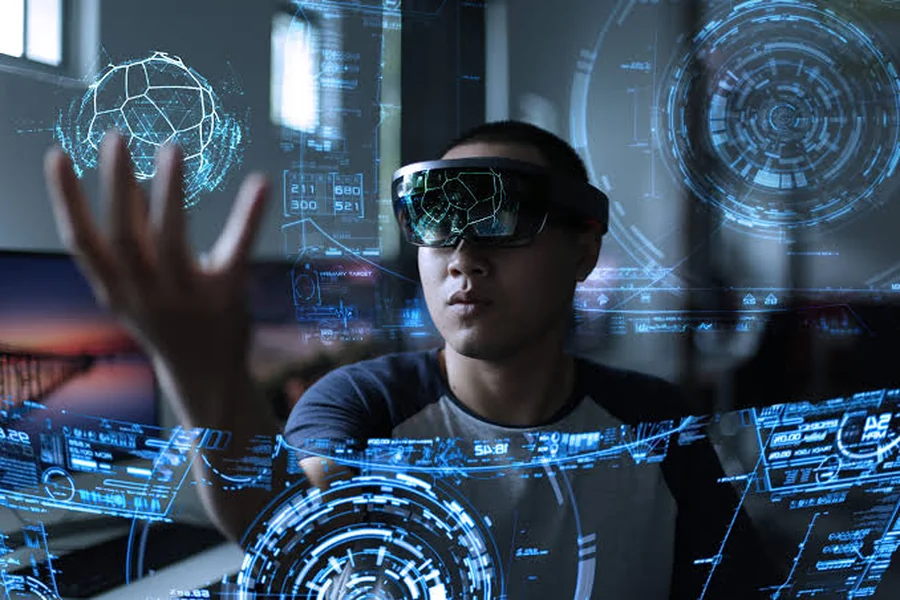
For decades, humanity has interacted with the digital world through glowing rectangles. We stare into smartphones, monitors, and televisions, treating them as portals to another dimension entirely separate from our physical surroundings. However, a massive paradigm shift is actively changing this dynamic. When we finally look Beyond the Screen: Augmented Reality and the New Human Experience will be defined by the seamless integration of digital elements into our physical environment. Instead of pulling our attention away from the world around us, this technology enhances our immediate reality. By superimposing computer-generated images, data, and interactive elements onto our field of vision, augmented reality fundamentally changes how we perceive, navigate, and understand our daily lives. This is not just a technological upgrade; it is a profound shift in human cognition and interaction. We are no longer passive consumers looking through a window. Instead, we are active participants in a hybrid world where the digital and physical coexist in perfect harmony, removing the barriers that once separated our physical lives from our digital data.
The Shift from Virtual to Blended Realities
To truly grasp the magnitude of this transformation, we must distinguish between different immersive technologies and understand their distinct goals. Virtual reality aims to transport the user entirely out of their current environment and place them into a closed, simulated world. While powerful for specific applications like immersive gaming or deep simulation training, it inherently isolates the user from their immediate physical context. Augmented reality takes the exact opposite approach. It respects the physical world as the foundational canvas and paints digital context directly over it. This blending of realities means you can walk down a busy city street, see the actual pedestrians and cars in front of you, but also receive real-time digital navigation arrows overlaid directly onto the pavement. You remain entirely present in your physical location while gaining the benefits of digital connectivity.
This transition from virtual isolation to blended integration represents a massive leap forward in usability and mainstream adoption. Early iterations of this technology were admittedly clunky, relying on holding up a smartphone camera to view a choppy digital overlay on a small screen. Today, the hardware is rapidly shrinking into lightweight glasses and even contact lenses. Spatial computing allows these wearable devices to understand the complex geometry of the room you are in. Advanced sensors and LiDAR technology scan your environment in milliseconds. If a digital ball bounces in an augmented environment, it will recognize your space and bounce realistically off your actual physical coffee table. This level of environmental awareness makes the digital elements feel tangible and persistent. As these wearables become visually indistinguishable from regular eyewear, the friction of accessing digital information will disappear completely. We will no longer need to look down at a device; the information will naturally exist in the space around us, perfectly contextualized to what we are looking at in any given moment.
Transforming How We Work and Learn
The implications for the global workplace and modern educational institutions are staggering and already beginning to unfold. In industrial, manufacturing, and medical fields, the ability to overlay complex instructions or data onto physical objects is saving both lives and millions of dollars. Imagine a surgeon operating on a patient. Instead of looking away from the surgical table to check vital signs or MRI scans on a distant monitor, those critical pieces of data are projected gently into their peripheral vision. They can see the exact location of a tumor overlaid onto the patient’s body in real-time, drastically reducing the margin for error and speeding up the procedure. Similarly, a mechanic repairing a complex commercial jet engine can see 3D schematics superimposed over the actual engine parts, with step-by-step digital animations guiding their hands. This hands-free, heads-up approach drastically improves efficiency, enhances safety, and allows workers to perform highly complex tasks with minimal specialized training.
In the realm of education, the learning process is shifting from passive memorization to active, spatial interaction. Reading about the solar system in a textbook is one thing, but standing in a classroom while a massive, mathematically accurate 3D model of the planets orbits around you is an entirely different cognitive experience. Students can physically walk around the digital sun, observe the rings of Saturn from different angles, and truly comprehend the scale of the universe. History lessons can involve watching historical figures deliver speeches right in the middle of the school gymnasium. Complex chemical bonds can be manipulated by hand, allowing students to intuitively grasp molecular structures that were once difficult to visualize. This transition to experiential learning accommodates different learning styles, particularly for visual and kinesthetic learners. It makes education more engaging, deeply memorable, and profoundly more effective for the next generation of students.
Redefining Social Interaction and Entertainment
Beyond workplace productivity and classroom education, augmented environments are set to completely redefine how we connect with one another and how we choose to entertain ourselves. Social media and digital communication have traditionally been constrained to flat feeds and timelines. In a spatial computing future, social interaction becomes holographic and deeply personal. Imagine having a conversation with a family member who lives on the other side of the planet. Instead of a flat, two-dimensional video call on a laptop, their lifelike, three-dimensional avatar sits on the couch across from you, making eye contact and exhibiting natural body language. The feeling of physical presence—the genuine psychological sensation that someone is in the room with you—bridges the emotional gap created by vast geographic distance. We will share blended experiences, playing board games with distant friends where the digital board sits on a physical table, and both parties can interact with the pieces in real-time.
Entertainment is also breaking free from the confines of the television set and the movie theater. Gaming has already seen a brief glimpse of this potential with mobile applications that place digital creatures in real-world parks, but the future holds much more complex integrations. Entire neighborhoods could become the immersive backdrop for interactive mysteries or action games. You might look out your living room window and see a digital dragon perched on a nearby building, visible only to those wearing the appropriate augmented eyewear. Concerts and live music events can be augmented with spectacular visual effects that float above the crowd, personalized to the viewer’s preferences. Art installations will no longer be bound by physical materials like stone or metal; sculptors can create massive, gravity-defying digital monuments in public squares that anyone can view and interact with using their devices. The world itself transforms into a boundless canvas for limitless human creativity.
Ethical Considerations in a Connected World
As with any exceptionally powerful technological leap, seamlessly blending the digital and physical realms introduces significant ethical, legal, and societal challenges that must be addressed. The most pressing of these is undoubtedly the issue of user privacy. For an augmented device to accurately place digital objects in a physical space, it must constantly map and analyze its surroundings. This means the glasses on your face are perpetually scanning the private rooms you enter, the physical objects you own, and the faces of the people you interact with. The sheer volume of spatial and biometric data collected about an individual’s private life is entirely unprecedented. Who owns this data? How is it secured against malicious hackers? Will massive tech corporations use this real-time environmental data to serve hyper-targeted, invasive advertising right into our private living rooms? Establishing strict, transparent data governance and providing robust user controls will be absolutely critical to preventing a dystopian surveillance state.
Furthermore, there is the psychological risk of cognitive overload and the fracturing of our shared reality. If everyone is wearing devices that heavily customize their view of the world, we may gradually lose our sense of a shared objective reality. Two people walking down the exact same street might experience entirely different environments, seeing different digital billboards, architectural overlays, and interactive elements based on their algorithms. This could severely exacerbate existing societal divides, as people retreat further into hyper-personalized, digital echo chambers. Additionally, the constant bombardment of digital notifications, messages, and visual stimuli directly in our field of vision could severely impact our attention spans, increase anxiety, and degrade our overall mental health. Designing intuitive user interfaces that respect our biological cognitive limits and prioritize human well-being over constant engagement will be a primary challenge for developers in the coming decade.
Final Thought
The evolution from staring down at glowing screens to living dynamically within augmented spaces marks one of the most profound milestones in modern human history. We are effectively gaining an entirely new sense—an ability to see the invisible data, connections, and digital architecture that power our modern world. While the hardware will inevitably continue to shrink and the software will become beautifully intuitive, the true measure of success for this technology will be how well it integrates into the human experience without eroding our crucial connection to physical reality. If we navigate the ethical pitfalls with extreme care, prioritize user privacy, and maintain our shared humanity, we can create a future where our physical and digital lives enrich one another perfectly. We are standing on the precipice of a broader, far more interconnected world. The journey ahead is not about abandoning our physical surroundings, but about enhancing them with infinite digital possibilities.
FAQs
What is the main difference between virtual reality and augmented reality? Virtual reality completely replaces your physical environment with a simulated digital world, whereas augmented reality overlays digital content onto the real world, allowing you to see and interact with both simultaneously.
How does spatial computing improve daily tasks? Spatial computing allows devices to understand the physical geometry of your surroundings, enabling digital objects to interact with real-world surfaces, which makes tasks like navigation, design, and complex repairs much more intuitive.
Will augmented eyewear eventually replace smartphones? Many industry experts believe that lightweight augmented glasses will eventually replace smartphones by removing the need to look down at a screen, instead placing information naturally into your field of vision.
What are the primary privacy concerns with this new technology? Because the devices must constantly scan and map your surroundings using cameras and sensors, there are significant concerns regarding who collects, stores, and uses the massive amounts of personal environmental data being recorded.
Can augmented environments be used for remote work? Yes, they enable lifelike holographic meetings and shared virtual workspaces, allowing remote teams to collaborate on 3D models and interact as if they were physically present in the same room.