The Global Semiconductor Shortage Eases as New Factories Open across the world, signaling a pivotal turning point for industries that have spent years struggling with severe supply chain bottlenecks. From the automotive sector to consumer electronics, the scarcity of microchips previously forced companies to drastically slash production targets, delay highly anticipated product launches, and raise retail prices to offset their losses. Fast forward to today, and the global manufacturing landscape looks decidedly different and far more promising. Billions of dollars in capital investments are now translating into operational manufacturing plants, shifting the momentum back toward a stable and balanced market. Government incentives, such as the CHIPS and Science Act in the United States, the European Chips Act, and similar legislative pushes in Asia, have successfully spurred an unprecedented wave of localized manufacturing. This strategic pivot not only addresses the immediate, pent-up demand but also lays the structural groundwork for a more resilient economic future. The frustrating era of empty showroom floors, backordered business laptops, and rationing of essential tech components is steadily fading into the rearview mirror. As advanced fabrication plants, commonly referred to as “fabs,” come online and aggressively ramp up their production capacities, manufacturers, tech giants, and everyday consumers alike are breathing a collective sigh of relief.
The Roots of the Silicon Bottleneck
To fully understand how far the semiconductor industry has come, it is necessary to look back at the chaotic origins of the crisis. The severe disruption was not the result of a single isolated event, but rather a perfect storm of converging macroeconomic and logistical factors. When the global pandemic first hit in early 2020, economic uncertainty prompted automakers and other large-scale industrial manufacturers to drastically cut their semiconductor orders. They anticipated a prolonged recession and a severe drop in consumer spending. However, the exact opposite happened in the technology sector. As populations were forced to work, learn, and entertain themselves from home, the demand for laptops, desktop computers, gaming consoles, webcams, and cloud computing infrastructure skyrocketed. Semiconductor foundries quickly pivoted their production lines to accommodate the booming consumer electronics market.
By the time the automotive industry realized that consumer demand for new vehicles was rebounding much faster than anticipated, chip manufacturers were already operating at maximum capacity. To compound the issue, semiconductors are incredibly complex products to create. The lead times for manufacturing these tiny silicon brains average anywhere from four to six months under normal, uninterrupted conditions. You cannot simply flip a switch and instantly increase output. Building a brand-new fabrication facility from the ground up historically takes three to five years and requires billions of dollars in highly specialized equipment, massive cleanrooms, and stringent environmental controls.
Furthermore, geopolitical tensions and regional lockdowns repeatedly disrupted the flow of essential raw materials and finished goods. The industry quickly realized that relying heavily on a concentrated number of foundries located in a single geographic region posed an existential threat to global supply chains. This harsh reality check acted as a powerful catalyst, prompting corporate leaders and policymakers to completely rethink their approach to semiconductor manufacturing. The crisis thoroughly exposed the inherent fragility of traditional just-in-time inventory models, pushing multinational companies toward a more defensive strategy that prioritizes supply chain resilience, robust inventory buffers, and localized production networks.
The Massive Surge in New Fabrication Facilities
The most direct and permanent solution to a systemic lack of manufacturing capacity is to build more factories. Today, we are finally witnessing the fruits of those labor-intensive, multi-billion-dollar endeavors. Major semiconductor titans, including TSMC, Intel, and Samsung, have collectively committed hundreds of billions of dollars to construct new fabs around the globe. The geographical distribution of these new facilities is intentionally designed to decentralize production and drastically reduce the risk of localized disruptions affecting the entire world’s supply of chips.
In the United States, states like Arizona, Texas, New York, and Ohio are rapidly transforming into massive technological hubs. Supported by substantial federal grants and tax incentives designed to reshore manufacturing, these domestic fabs are beginning to process silicon wafers, marking a historic return of semiconductor dominance to American soil. Similarly, the European Union has made aggressive, coordinated moves to attract the world’s leading chipmakers. Countries like Germany, France, and Ireland are now hosting cutting-edge facilities that will drastically increase the continent’s overall share of global semiconductor production, aiming for digital sovereignty. Japan and South Korea are also accelerating their own domestic expansions to maintain their long-standing competitive edge in this high-stakes, lucrative industry.
What makes these new factories particularly impactful is their dual focus on advanced nodes alongside legacy, mature technologies. While leading-edge, microscopic chips are essential for training artificial intelligence models, powering premium smartphones, and running high-performance computing centers, older or “mature” nodes are equally critical. Mature nodes power the microcontrollers found in modern cars, medical devices, defense systems, and household appliances. The new facilities currently opening are equipped with state-of-the-art automation and extreme ultraviolet (EUV) lithography systems, enabling higher yields, fewer defects, and better energy efficiency. As these massive plants achieve full commercial scale, the aggregate output of global wafers is steadily increasing by millions per month. This monumental, industry-wide boost in production volume is the primary reason the global chip crunch is finally abating.
Key Industries Seeing Immediate Relief
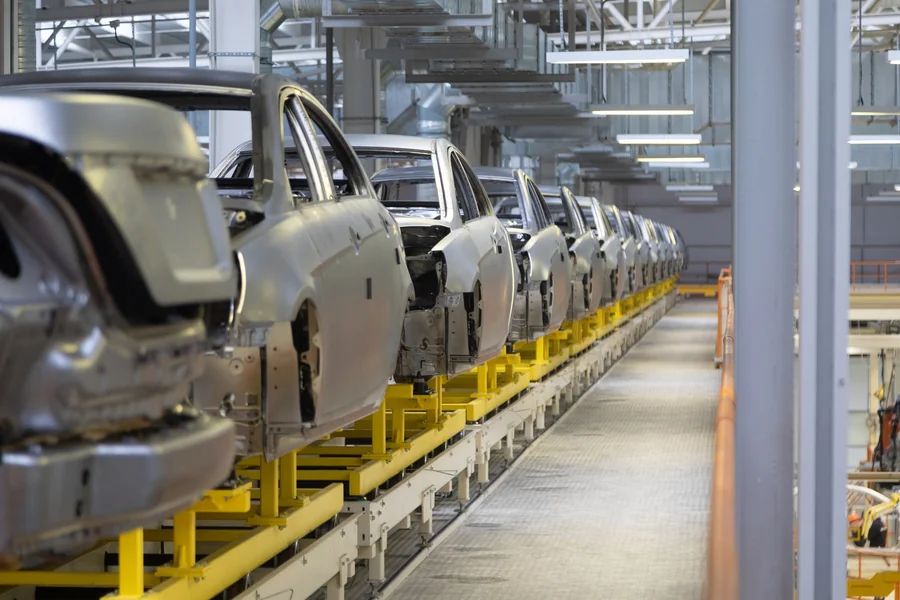
The influx of newly manufactured semiconductors is injecting much-needed vitality and predictability into several core sectors of the global economy. The automotive industry is perhaps the most visible and widely discussed beneficiary. Modern vehicles are essentially sophisticated computers on wheels, requiring hundreds or even thousands of individual chips to manage everything from basic engine timing and advanced driver-assistance systems (ADAS) to large infotainment screens and battery management for electric vehicles. During the absolute peak of the shortage, automotive giants were forced to park thousands of unfinished vehicles in holding lots, waiting for missing chips to be installed. Now, production lines are running smoothly, vehicle inventory at local dealerships has fully recovered, and buyers are no longer facing excruciating, year-long wait times for new cars.
The consumer electronics sector is also reaping the substantial rewards of stabilized chip supplies. Video game consoles, which were notoriously difficult to purchase for years without resorting to exorbitant third-party scalpers and resellers, are now widely available on retail shelves and online storefronts. The rapid, reliable availability of internal components has allowed hardware manufacturers to normalize their annual release cycles for smartphones, tablets, wearable tech, and smart home devices. Furthermore, the stabilization of the supply chain has helped moderate the prices of these electronics, providing significant financial relief to end consumers who previously bore the brunt of scarcity-driven inflation and price gouging.
Beyond consumer goods and automobiles, the critical industrial and healthcare sectors are experiencing fewer life-threatening bottlenecks. Medical equipment manufacturers, who rely heavily on specialized, highly regulated sensors and microcontrollers for MRI machines, ventilators, pacemakers, and patient monitoring systems, can now fulfill hospital orders without the crippling delays seen in recent years. Industrial automation companies are also successfully securing the programmable logic controllers necessary to modernize factory floors and optimize global logistics networks. Across the board, the predictable and steady flow of semiconductors is allowing businesses of all sizes to shift their focus away from daily crisis management and supply chain firefighting, turning their attention back to long-term innovation, product development, and strategic market growth.
Remaining Vulnerabilities in the Chip Supply Chain
While the current trajectory of the industry is overwhelmingly positive and encouraging, it would be a dangerous mistake to assume that the semiconductor ecosystem is completely immune to future disruptions. The supply chain remains incredibly complex, spanning multiple continents and requiring highly specialized, sometimes scarce, raw materials. For instance, the production of microchips demands ultra-pure gases like neon, rare earth metals, and specialized photoresists and chemicals. Any future geopolitical conflict, severe natural disaster, or retaliatory trade dispute in the specific regions that supply these foundational materials could easily trigger localized shortages once again, halting production lines even in newly built fabs.
Another ongoing, systemic challenge is the sheer availability of skilled labor. Building the physical shell of a multi-billion-dollar fab is only half the battle; operating it efficiently requires thousands of highly trained electrical engineers, cleanroom technicians, software developers, and material scientists. The rapid, simultaneous expansion of manufacturing facilities worldwide has created a fierce, competitive war for technical talent. Educational institutions, universities, and private tech companies are actively partnering to develop new training pipelines and apprenticeship programs, but cultivating a specialized, highly capable workforce takes years. A persistent shortfall in qualified personnel could potentially delay the full utilization and expected output of some of these newly constructed factories.
Additionally, the explosive, unprecedented growth of artificial intelligence is creating a wildly disproportionate demand for advanced logic and memory chips. Generative AI models and large language algorithms require massive clusters of high-performance graphics processing units (GPUs) and specialized high-bandwidth memory to train effectively. If the relentless demand for AI data center infrastructure outpaces the industry’s ability to manufacture these specific, highly complex components, we could see a targeted, severe shortage isolated within the advanced chip segment. This could occur even as the broader market for everyday mature nodes remains perfectly well-supplied. Therefore, continuous financial investment, agile supply chain management, and transparent international cooperation remain essential tools for navigating the unpredictable future landscape of global tech manufacturing.
FAQs
What caused the global semiconductor shortage?
The shortage was caused by a combination of surging consumer demand for electronics during the pandemic, sudden shifts in automotive manufacturing orders, and global supply chain disruptions that delayed the transportation of raw materials and finished components.
How are new factories helping to solve the chip crisis?
New fabrication facilities increase the overall global capacity for manufacturing semiconductors, allowing the supply of chips to finally meet and stabilize against the high demands of various industries like automotive and consumer electronics.
Will the prices of electronics decrease now that the shortage is easing?
Yes, as the supply of microchips normalizes and production bottlenecks are resolved, the scarcity-driven markups on consumer electronics and vehicles are subsiding, leading to more stabilized and affordable retail prices.
What role does government policy play in semiconductor manufacturing?
Governments worldwide have introduced massive financial incentives, grants, and tax breaks to encourage domestic chip production, reducing reliance on foreign supply chains and bolstering national economic security.
Are all types of microchips no longer in short supply?
While the supply for mature chips used in cars and appliances has largely stabilized, there can still be tight supplies for the highly advanced chips required for artificial intelligence and leading-edge data centers due to explosive demand.
Final Thought
The fact that the global semiconductor shortage eases as new factories open is a powerful testament to the resilience, ingenuity, and adaptability of the global manufacturing sector. Through unprecedented financial investments, bold government policies, and a necessary strategic realignment of international supply chains, the tech industry has successfully navigated one of the most severe and complex logistical crises in modern economic history. The new, state-of-the-art fabrication facilities coming online today do much more than simply fulfill backlogged corporate orders; they represent a fundamental, permanent shift toward a more robust, decentralized, and economically secure technological foundation. As we move forward into an increasingly digitized world driven by smart devices, autonomous electric vehicles, and revolutionary artificial intelligence, this vastly expanded global manufacturing capacity will undoubtedly be the reliable engine that powers human innovation and connectivity for many decades to come.